

Homeowner Guide · Spartanburg, SC
How to Know If Your Roof Was Damaged After a Storm in Spartanburg, SC
Storm Safety
·
Insurance Guide
·
South Carolina
If you live in Spartanburg, SC and a storm just rolled through, the first question on your mind should be: did that storm damage my roof? It is one of the most important questions you can ask as a homeowner, and the answer is rarely obvious from ground level.
Spartanburg sits in the Upstate South Carolina Piedmont, a region that takes hits from severe thunderstorms, high winds, hail, and the remnants of tropical systems rolling in from the coast every year between June and November. According to a published climatology study archived by NOAA’s National Weather Service Greenville-Spartanburg office, damaging convective wind gusts are the most common form of severe weather across the region, with large hail a regular secondary threat. The Piedmont in particular, which includes Spartanburg County, sees summer as its peak period for wind damage events. That is not a small deal for homeowners.
Here is what makes roof damage in Spartanburg so tricky: a roof can sustain serious damage and show zero visible signs from the ground. You might walk outside after a storm, see your gutters intact and your yard clear of shingles, and assume everything is fine. But underneath the surface, something much worse may already be happening. This guide walks you through exactly how to know if your roof was damaged after a storm in Spartanburg, SC, step by step, with the research and context to back it up.
How to Know If Your Roof Was Damaged After a Storm in Spartanburg, SC
Start From the Ground: What You Can See Without Climbing
The safest place to begin your post-storm assessment is the ground. You do not need to get on your roof. In fact, getting on a damaged roof yourself is actively risky, and most professionals across the Spartanburg area recommend against it. Here is what to look for from the perimeter of your home.
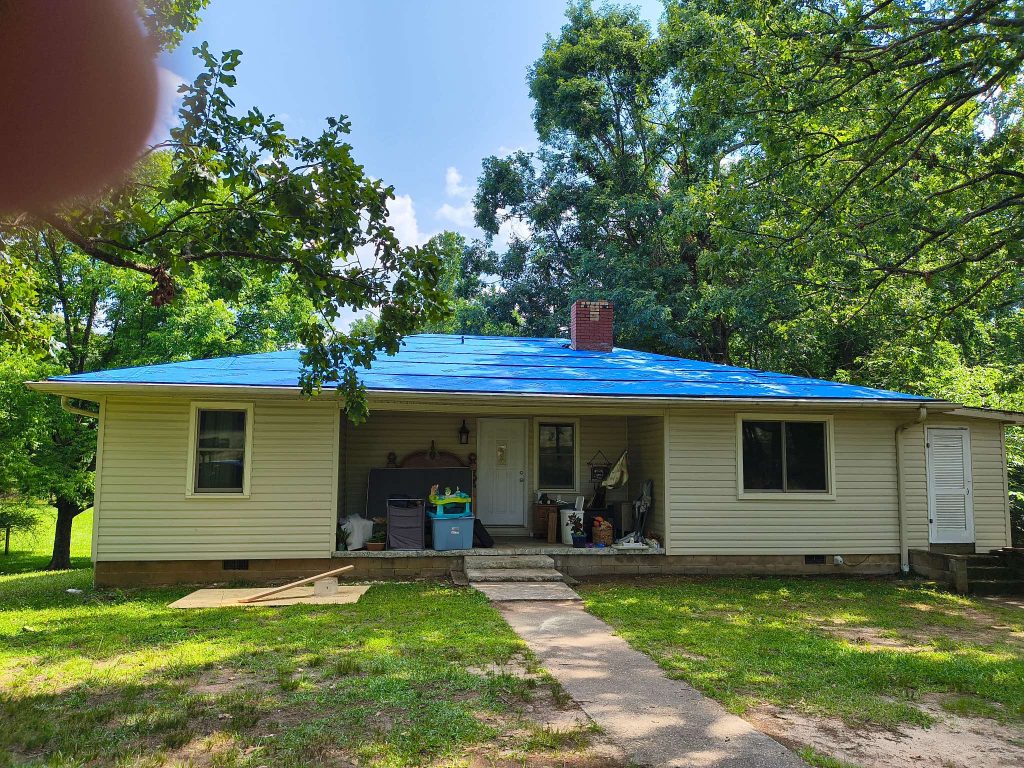
Missing or visibly damaged shingles. Walk a slow loop around your house and scan the roofline. Look for shingles that have blown off entirely, shingles that are curling at the edges, cracked shingles, or shingles with a blistered or bruised appearance. Any of those conditions means your roof’s protective layer has been compromised.
Shingle granules in the gutters or on the ground. This is one of the most telling signs after a hailstorm, and it is one most homeowners overlook. Asphalt shingles are coated with mineral granules that protect the underlying material from UV light and weathering. When hail or wind strips those granules, the asphalt is exposed. Look in your gutters, at the base of your downspouts, and on the ground around your foundation. If you find a noticeable accumulation of small gritty debris that looks like coarse sand, that is granule loss.
Dents or dings on soft metal surfaces. Check your gutters, downspouts, metal roof vents, flashing around your chimney, and any exposed fascia or trim. Aluminum and soft metal surfaces dent easily when struck by hail, and dents on those surfaces are a reliable proxy indicator that your shingles took hits too. Even if the shingles look okay at a glance, dented metal nearby confirms hail reached your home.
Debris on the roof surface. Tree limbs, leaves packed into valleys, or anything that impacted your roof during the storm can trap moisture, abrade shingles, or break flashing. Even if debris appears minor, it can cause damage over time if left unaddressed.
Damaged or clogged gutters. Gutters that have pulled away from the roofline, developed cracks, or are holding standing water are a sign that either hail impacted them directly or storm debris overwhelmed them. Gutters that drain poorly will direct water toward your foundation and potentially back up under your eaves.
Go Inside: The Interior Warning Signs You Should Not Ignore
After checking the exterior, step inside. The interior of your home can reveal roof damage that is completely invisible from outside.
Water stains on ceilings and walls. Brown or yellow spots, rings, or discoloration on your ceiling are a clear signal that water has found a path through your roof system. These stains sometimes appear days after a storm as moisture that soaked into insulation slowly works its way down.
Bubbling or peeling paint. If the paint on your ceiling or upper walls is bubbling, blistering, or peeling, water infiltration is likely the cause.
Attic inspection. If you can safely access your attic, do it. Look for visible light coming through the roof deck, wet or compressed insulation, water stains on the decking or rafters, and any signs of active moisture. A flashlight and a few minutes in your attic after a storm can tell you more than hours spent studying the exterior.
Warped or bowed rafters. Even if rafters are not broken, warping indicates that water has entered through cracks or holes and is affecting the structural members of your roof. This is a serious warning sign that needs professional attention immediately.
Mold or mildew smell. If you notice a musty odor in your attic or in upper rooms of your house after a storm, that is moisture collecting in areas you may not be able to see directly.
Understanding the Three Types of Storm Damage in Spartanburg
Not every storm damages a roof the same way. Spartanburg homeowners deal with three primary damage types, and each leaves different calling cards.
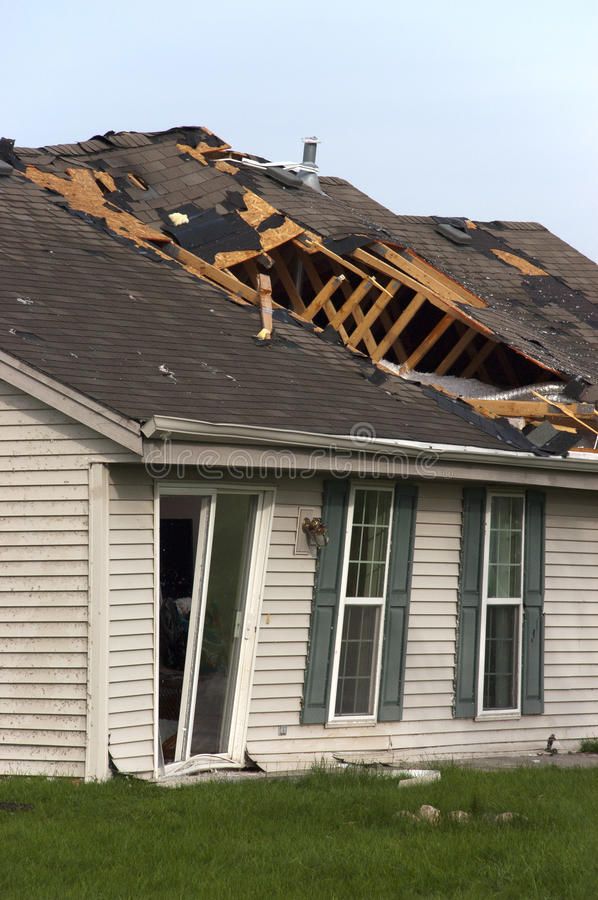
Wind Damage
1. Wind Damage
High winds peel shingles back, lift flashing, and in severe cases rip entire sections of roofing off. The National Weather Service Greenville-Spartanburg office documents sustained damaging wind events regularly across Spartanburg County, with gusts capable of exceeding 70 mph in severe thunderstorm events. Even winds in the 45 to 60 mph range can lift shingles that have already been weakened by age or previous storms. Wind damage often shows up as shingles that are partially detached, flashing that has been bent or pulled back from chimneys and vents, and ridge cap materials that have shifted or blown off entirely. The exposed areas left by wind damage become immediate entry points for water.
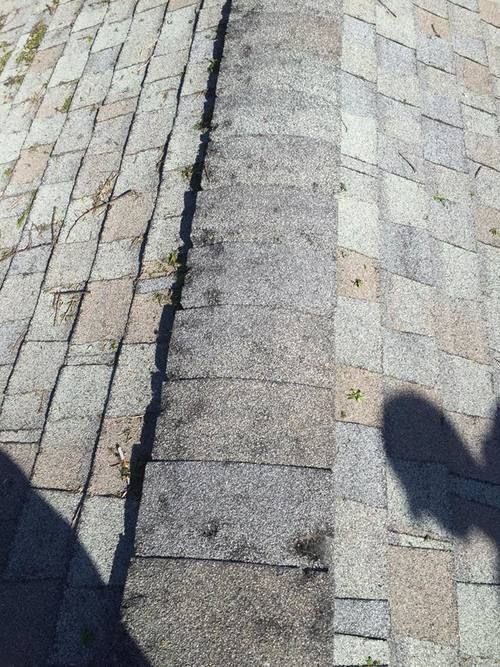
Hail Damage
2. Hail Damage
Hail damage is the most deceptive form of roof damage because it often causes no visible leaking immediately. Instead, it quietly accelerates deterioration that leads to failure months or even years later. A landmark 10-year study by the Insurance Institute for Business and Home Safety (IBHS), published in the peer-reviewed journal Frontiers in Materials, found that even sub-severe hailstones, meaning stones smaller than 1 inch in diameter, can dramatically accelerate shingle aging. The research showed that shingles exposed to repeated small hail events combined with natural weathering became roughly ten times more vulnerable to damage from subsequent storms compared to new shingles. IBHS has noted that up to 90% of post-catastrophe insurance claims include roof damage, and that hail is responsible for an estimated 50% to 80% of annual damages from severe convective storm events. Signs of hail damage include: circular dents on shingles that may look like bruises, granule loss concentrated around impact points, dents or dings on gutters and vents, and in severe cases, cracks or punctures in the shingle material.
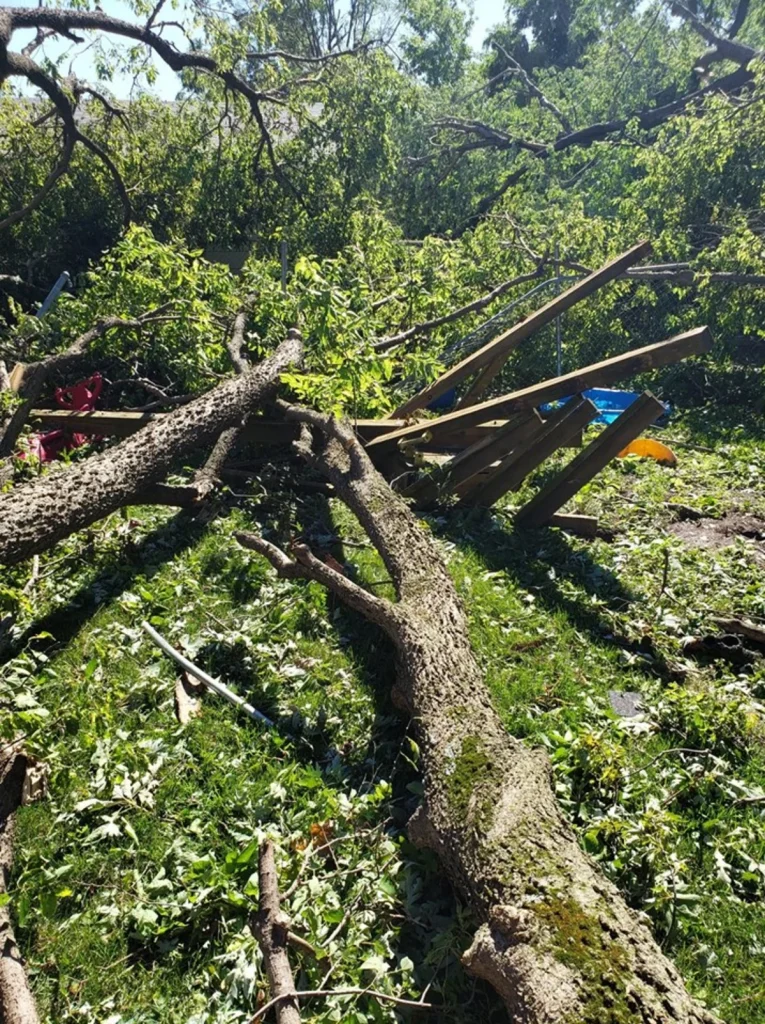
Debris & Trees
3. Debris and Fallen Tree Impact
Spartanburg’s tree canopy is a genuine hazard during high-wind storms. Tree limbs and full trees falling onto roofs can cause concentrated structural damage, broken roof decking, and compromised framing that goes beyond surface shingle damage. Even a moderate-sized limb landing on your roof can crack decking, break rafters, or punch through the sheathing entirely. After any storm where tree debris landed on your roof, even if the branch looked small, get a professional inspection. Hidden structural damage beneath the surface is common in these scenarios.
The Hidden Danger: Damage You Will Not See for Weeks
One of the most important things to understand is that roof storm damage does not always reveal itself right away. Hail damage that strips granules may not produce a visible leak for months. Wind damage that lifts flashing slightly allows moisture infiltration that only shows up as a ceiling stain the next time it rains heavily.
The IBHS research center, which operates testing facilities in South Carolina, found through field studies that even homes that showed no immediate visible distress after a storm could be harboring compromised shingles that were now years closer to failure than their age would suggest. In other words, your roof can look fine from the ground and still need attention.
This is why a professional inspection after any significant storm is not an abundance of caution. It is standard practice. Professional roofers use thermal imaging cameras and moisture meters to trace water paths and identify affected areas that are invisible to the naked eye.
Step-by-Step: What to Do After a Storm in Spartanburg
Here is the correct sequence after any storm that hits your area with high winds, hail, or heavy rain.
Make sure everyone is safe first.
If you see significant structural damage, sagging ceilings, or active water intrusion, do not stay inside. Get out and call emergency services.
Document everything from the ground.
Once it is safe, take wide-angle photos and video of your entire roof from multiple angles. Capture close-ups of any visible damage. Photograph gutters, siding, vehicles, and any objects that dented. Your phone's date and time stamp creates a record of when documentation occurred, which matters for insurance purposes.
Prevent further water damage.
If water is entering your home, place containers to catch drips and move valuables out of affected areas. Do not attempt permanent repairs before an insurance adjuster has inspected the damage, but temporary tarping to stop ongoing water intrusion is both acceptable and often required by your policy to mitigate further damage.
Get a professional roof inspection before calling your insurance company.
A licensed roofing contractor can identify damage you would never spot from the ground, provide a detailed written report with photos, and give you an accurate repair or replacement estimate. Critically, this independent report becomes your evidence when working with your insurer. The insurance adjuster works for the insurance company. An independent contractor's inspection gives you a counterbalance.
Contact your insurance company promptly.
Most South Carolina homeowners insurance policies require reporting within one year of damage, but best practice is notifying your insurer within 24 to 48 hours of discovery. The SC Department of Insurance's Post-Disaster Claims Guide explains that your coverage type, whether Replacement Cost Value (RCV) or Actual Cash Value (ACV), significantly affects what you receive. The Guide is worth reading before you file.
Be present when the adjuster inspects.
Better yet, have your roofing contractor there too. Adjusters can miss damage, especially after high-volume storm events when they are handling many claims simultaneously. Your contractor can point out damage and ensure the inspection is complete.
Know your rights as a South Carolina homeowner.
Under Title 38, Chapter 59 of South Carolina law, insurers must follow strict guidelines. They have 20 days to provide proof of loss forms after you notify them. South Carolina also has a 90-day rule that creates significant leverage for policyholders: if an insurer refuses payment without reasonable cause and you win in court, they must pay attorney fees up to one-third of the judgment. You can also file a complaint with the South Carolina Department of Insurance at any time.

How South Carolina Law and State Programs Protect You
South Carolina homeowners have more protection and more resources than most realize.
SC Safe Home Program
The SC Department of Insurance publishes a dedicated Post-Disaster Claims Guide and maintains the SC Safe Home Program, a state-funded grant initiative that helps eligible homeowners strengthen their roofs against wind damage. The program, established through the Omnibus Coastal Property Insurance Reform Act of 2007, partners with the IBHS FORTIFIED Roof Program and can provide grants of up to $7,500 toward roof retrofitting. Homeowners who have upgraded through the program report saving an average of 24% on insurance premiums, according to the state Department of Insurance’s 2024 annual report.
The SC Safe Home program opened its 2026 application portal in February 2026 and is currently operating with expanded funding of $8.9 million for the fiscal year. While the coastal-county eligibility requirement means Spartanburg County homeowners may not qualify for the SC Safe Home grant directly (the program targets coastal counties), the IBHS FORTIFIED Roof designation is available statewide, and several insurance carriers in South Carolina offer discounts of 10% to 35% off the wind portion of your premium for FORTIFIED-certified roofs.
Worth noting: South Carolina law does not allow insurance companies to raise your premium solely because you filed a weather-related claim. That protects you from the fear of “using” your insurance after a storm.
The Numbers Behind Storm Damage in South Carolina
Some context on just how active this state’s weather profile really is:
The South Carolina State Climatology Office documents centuries of catastrophic weather events affecting the state, from tornado outbreaks to floods to hurricane landfalls, with Upstate counties consistently in the path of severe convective storms moving off the mountains and through the Piedmont each spring and summer.
The NOAA IBHS research center, located in Richburg, South Carolina, has documented through field studies that hail is responsible for an estimated 50% to 80% of annual damages from severe convective storm events in the United States, and that 90% of post-catastrophe insurance claims involve roof damage. Those numbers reflect a very direct connection: storms hit South Carolina, roofs take the hit, and homeowners who are not paying attention pay for it later.
The NOAA Storm Prediction Center tracks severe weather reports nationally. After any significant storm, homeowners can cross-reference dates and storm tracks against reports from the SPC or the NWS Greenville-Spartanburg office at weather.gov/gsp to confirm what weather events hit their area and when. This is also useful when an insurance company challenges the date of a roof damage claim.
Red Flags That Should Send You Straight to a Contractor
Some combinations of signs should prompt immediate action, not a wait-and-see approach. Contact a licensed Spartanburg-area roofing contractor without delay if you notice any of the following after a storm:
- Granules collecting heavily in your gutters combined with any visible shingle damage. This indicates a roof that has lost substantial protective coating and is now significantly more vulnerable to water penetration and UV degradation.
- Water stains on interior ceilings or walls that appeared or worsened after the storm. Active water infiltration that has reached your living space means the damage is real and already progressing.
- Visible sagging, bowing, or soft spots on your roof surface. These indicate structural damage, not just cosmetic surface damage, and require urgent professional evaluation.
- Any missing shingles. Even one missing shingle is an open door for water entry. Do not wait for the next rain to confirm whether it is a problem.
- Dents on all soft metal surfaces around your home combined with no other visible roof damage. This is actually the most common hail scenario: the shingles absorbed the hits and look normal from the ground, but granule loss has already occurred and damage is present.
The One Thing Most Homeowners Get Wrong
The single biggest mistake Spartanburg homeowners make after a storm is assuming that if they do not see an active leak or missing shingles, their roof is fine.
⚠ Common Misconception
Hail damage that stripped granules produces no leak on day one. Wind damage that partially lifted flashing produces no visible sign until the next heavy rain. And once water starts entering, it does not stop on its own. A small compromise in your roof’s integrity that goes unaddressed for one storm season can result in rotted decking, ruined insulation, mold growth in your attic, and interior structural damage, all of which cost far more to remediate than the original roof repair would have.
The smart move after any significant storm in Spartanburg is a professional inspection, even when everything looks fine from the ground.
A Personal Recommendation
After researching the full scope of how storm damage works in this region, what the science says about hail, and how South Carolina’s insurance and legal framework applies to homeowners, I would recommend one simple rule for any Spartanburg homeowner: do not skip the post-storm inspection. It does not need to be dramatic. Most licensed local roofing contractors offer free inspections after storm events, and a clean bill of health costs you nothing but an hour of your time.
The IBHS research makes clear that even small hail events you might not think twice about can be quietly shortening the life of your roof with every hit. The NWS Greenville-Spartanburg office tracks this region closely precisely because it is genuinely active severe weather territory. Your roof is the first and primary line of defense for everything inside your home.
Know the signs. Document fast. Call a licensed local roofer before calling your insurance company. And use the resources the state provides. The SC Department of Insurance is a free, accessible resource that exists specifically to help homeowners navigate exactly these situations. Take advantage of it.
Table of Contents
Key Statistics
90%
of post-catastrophe insurance claims involve roof damage
80%
of annual convective storm damages caused by hail
10×
more vulnerable — shingles after repeated small hail events (IBHS study)
$7,500
max SC Safe Home grant for roof fortification
Quick Action
Don’t wait. Most reputable Spartanburg contractors offer free post-storm inspections. Get documented before calling your insurer.
Helpful Government and Research Resources
Verified links to official agencies and peer-reviewed research referenced in this guide
NOAA / NWS
Local storm tracking, severe weather history, storm reports
State of South Carolina
Post-disaster claims guide, homeowner rights, SC Safe Home program
Frontiers in Materials
Peer-reviewed research on small hail and asphalt shingle damage
NOAA Repository
Published climatology study for Greenville-Spartanburg region